Scooter & Wheelchair Folding Architectures
How might we make a mobility vehicle effortless to bring anywhere without compromising performance and design?
After launching STRUTT ev¹, a smart personal mobility vehicle, we explored a more portable version that retained its performance, experience and distinctive design language. The goal was to make transport easier without losing the essence of the original product.
The project drew on hundreds of user interviews and home visits during the development of ev¹, many of which I personally conducted or participated in. This gave me firsthand insight into the underlying need: independence, not folding itself. We considered the entire transport experience, from folding and handling to lifting, loading and setup.
From this foundation, I independently created six mechanically distinct folding architectures, each exploring a different transformation principle. I developed them through Rhino modelling and vehicle packaging studies, then built a functional 3D printed prototype at 1:5 scale to test and refine the selected mechanism.
Research
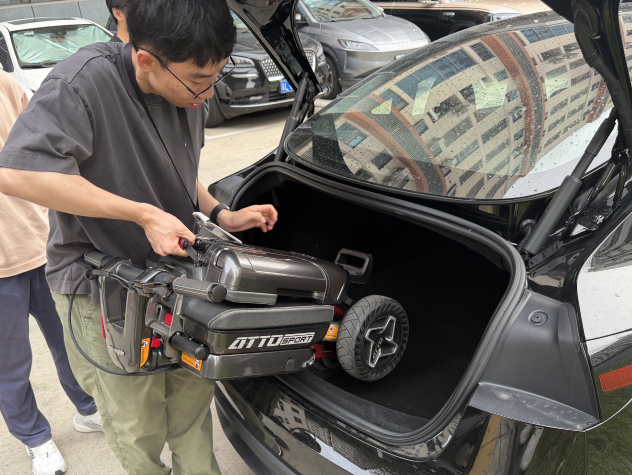
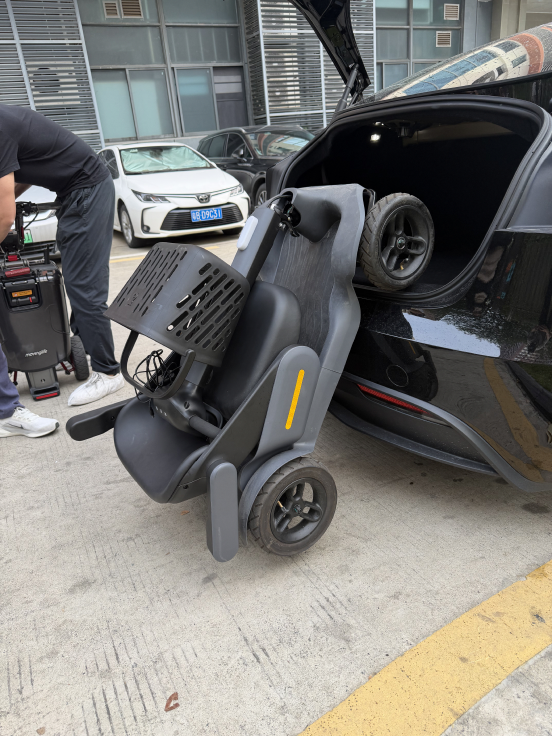
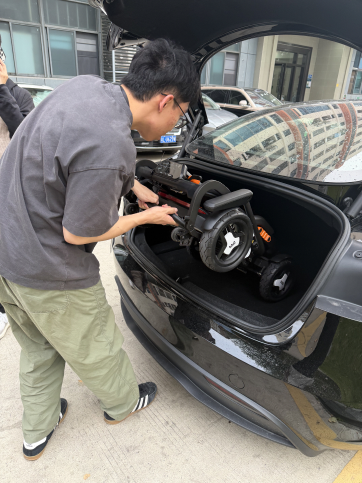
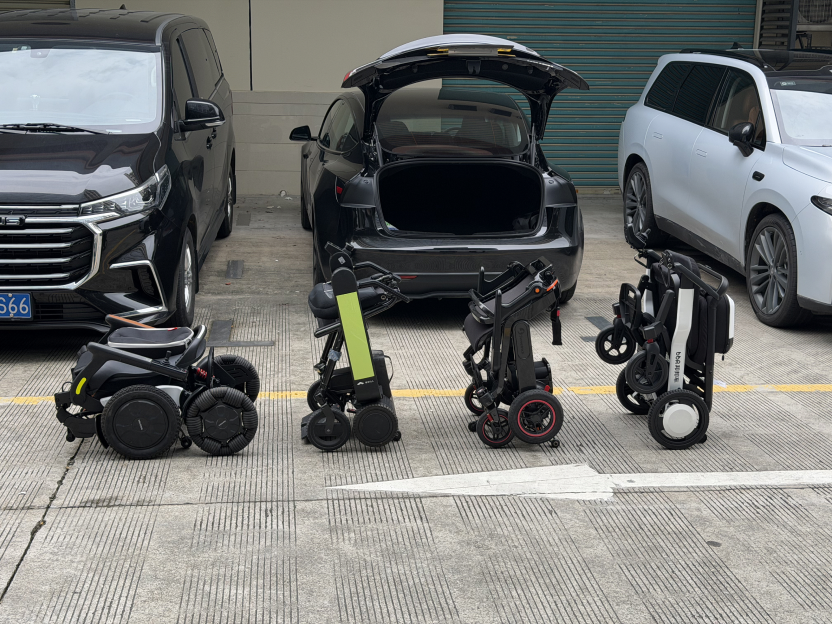
We studied how other products solve portability, including micro mobility vehicles, electric bikes and folding scooters, looking at how each one folds or disassembles, how it is loaded, and what it weighs. Desk research was paired with physical testing of competitor products, so the comparison covered the real experience of each method rather than its specification alone.
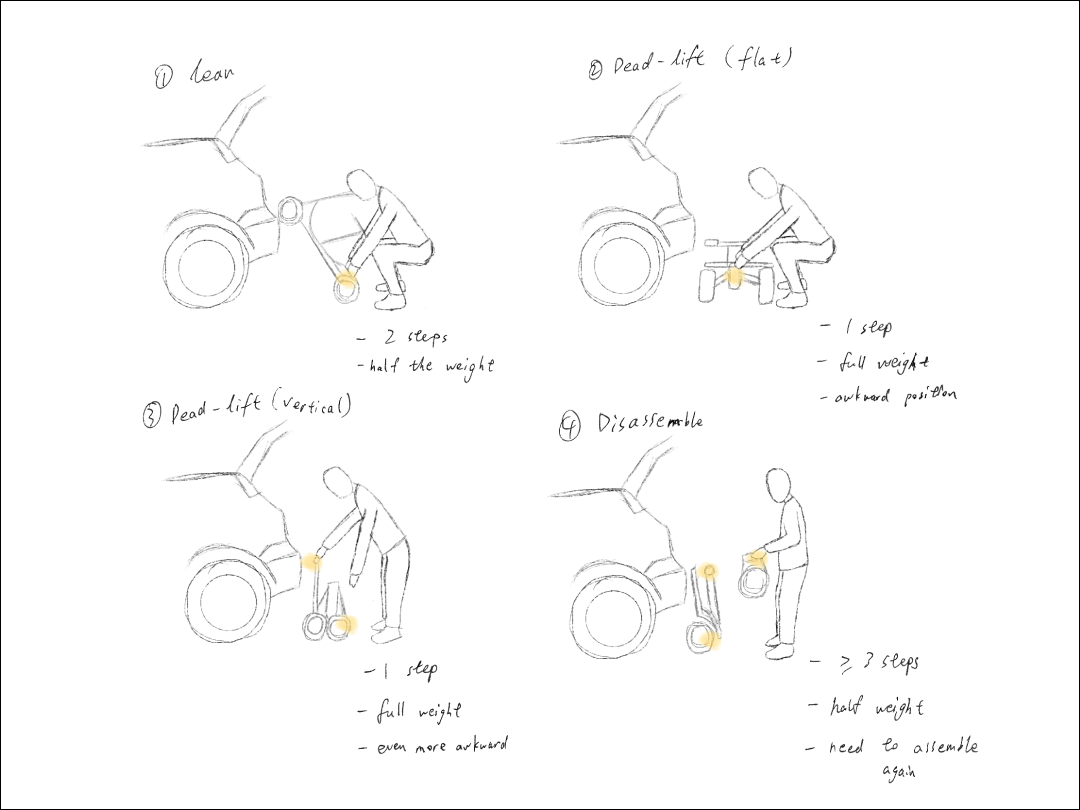
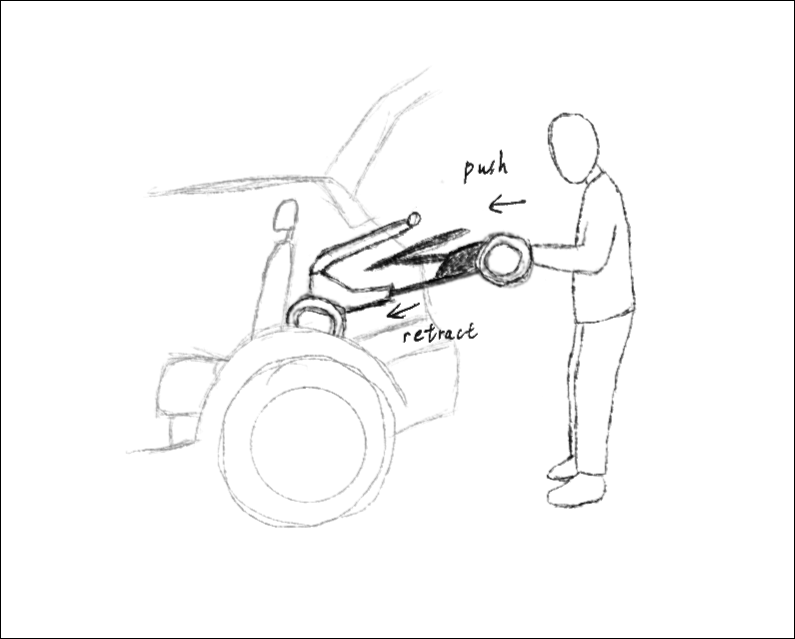
Across everything we tested, the major loading approaches reduced to 4. We selected leaning as the primary method: resting the front of the vehicle against the boot lip so the car carries part of the load, and the user never lifts the whole machine at once. It was the most practical of the 4.
Ideation
With the existing solutions, their real world feel and the evaluation criteria in mind, we moved into independent ideation. At this stage the brief was deliberately open. We explored widely first and combined the strongest ideas later.
I developed 6 distinct directions. Each went through the full loop: sketch, 3D model, 1:5 scale print, and load testing against a 1:5 scale model of a car boot. Visual material for these concepts is withheld under a confidentiality agreement. Each mechanism is described below, and I am glad to talk through the work in more detail in person.
| Seat | Cushion | |
|---|---|---|
| Rotation | S2 | |
| Slide | S3, S4 | S5, S6 |
| Fold | S1 |
*Concept geometry has been omitted for confidentiality.
Evaluation
Size and loading experience decide whether the product is practical for a user at all. If it does not fit a normal car such as a Toyota Prius, it is not a purchase they can realistically make. If an older user cannot load it alone, it fails the independence it exists to provide.
At this stage the geometry was not resolved enough to judge folded size fairly, so the screen ran on what could be measured: how the chassis transforms, and how many parts the user has to remove. Both are proxies for the loading experience, and both were comparable across all six.
S5 and S6 came through: both need only the seat cushion removed, the lowest disassembly burden in the set, and both collapse by sliding, which suits leaning and pushing because the vehicle shortens along the direction the user is already pushing. Sliding also covered ground the team’s rotation directions did not. After design and R&D review, S6 went forward, reaching a similar folded result with fewer moving parts and lower structural risk.
From scooter to wheelchair
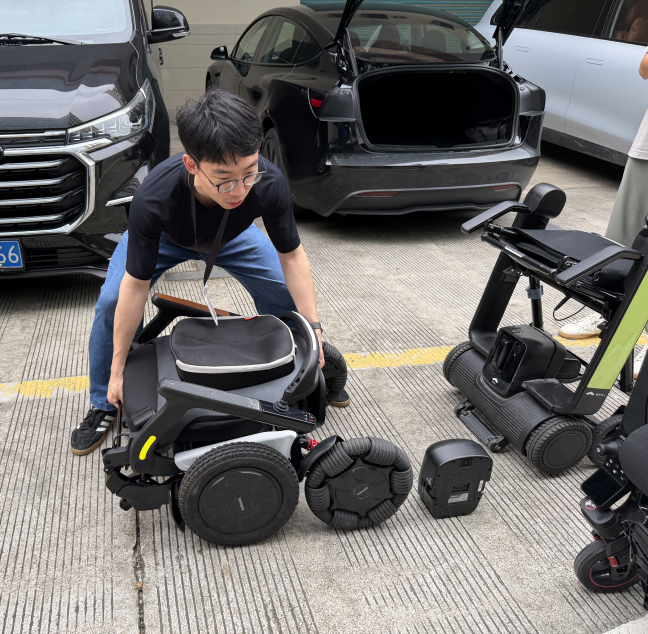
Before detailed development began, the brief shifted from a mobility scooter to a powered wheelchair. The portability study was therefore reframed around a different chassis, seating structure and weight distribution, but the idea of leaning against the trunk to avoid a full lift lives on.
The team repeated the loading research and physical testing while retaining the same objective: making the product easier to lift, transport and store.
I developed a single direction through sketch, 3D model and physical prototype, against a tighter brief. It had to be lighter, cheaper to manufacture, and visually continuous with the existing ev¹.
The project concluded with a functional 1:5 prototype demonstrating the balanced two-part split, flat-folding seat structure and trunk-assisted loading sequence.